Why The Body? Why The Page?
Oct 19 2026
I’m in the process of developing a new workshop called Body + Page: Creative Curiosity.
I thought about it a lot whilst on a week-long silent meditation retreat at Gaia House in Devon a couple of weeks ago.
This blog explores some of the ideas behind Body + Page; how the body can be a portal to all of life, how both relaxation and movement can open up deeper ways of knowing and how the page can be a place to bring all those discoveries together and to find out even more.
There are three physical experiments in this blog, which you could try if you’d like to get an embodied taster. There are also a bunch of ponder points, which you could explore through meditation, movement or writing if you’re called to.
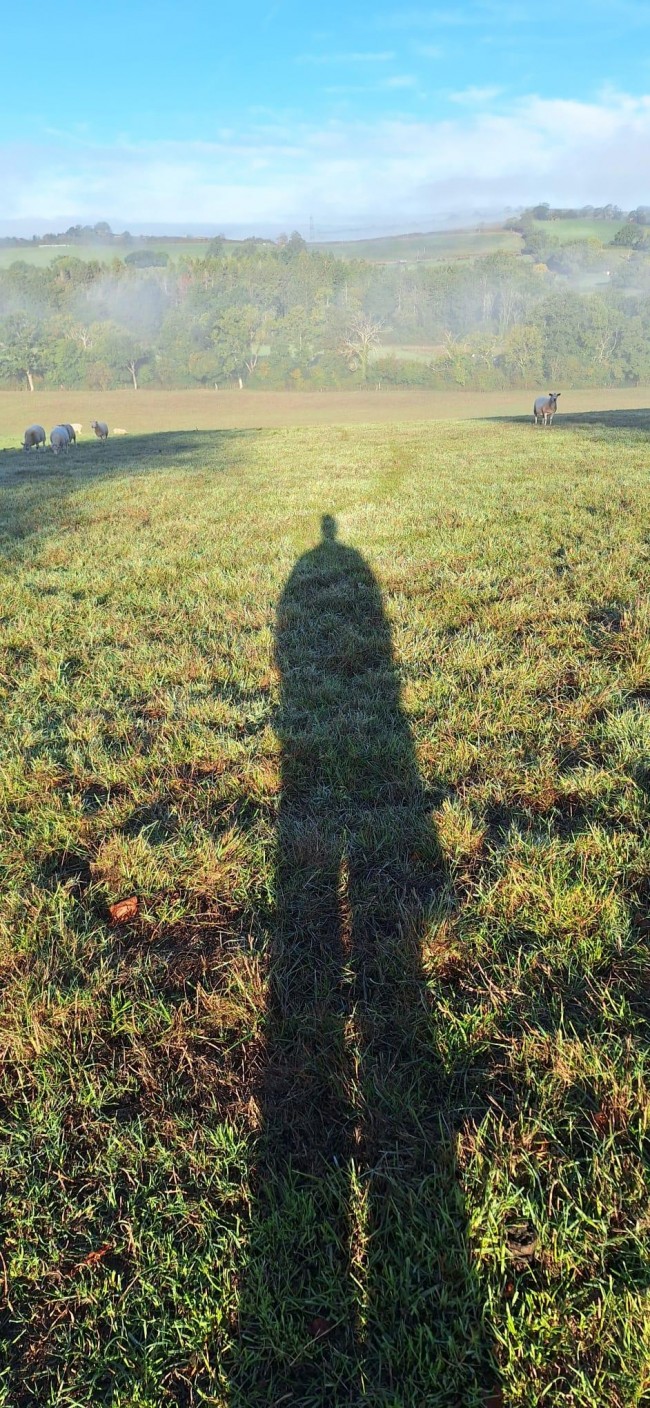
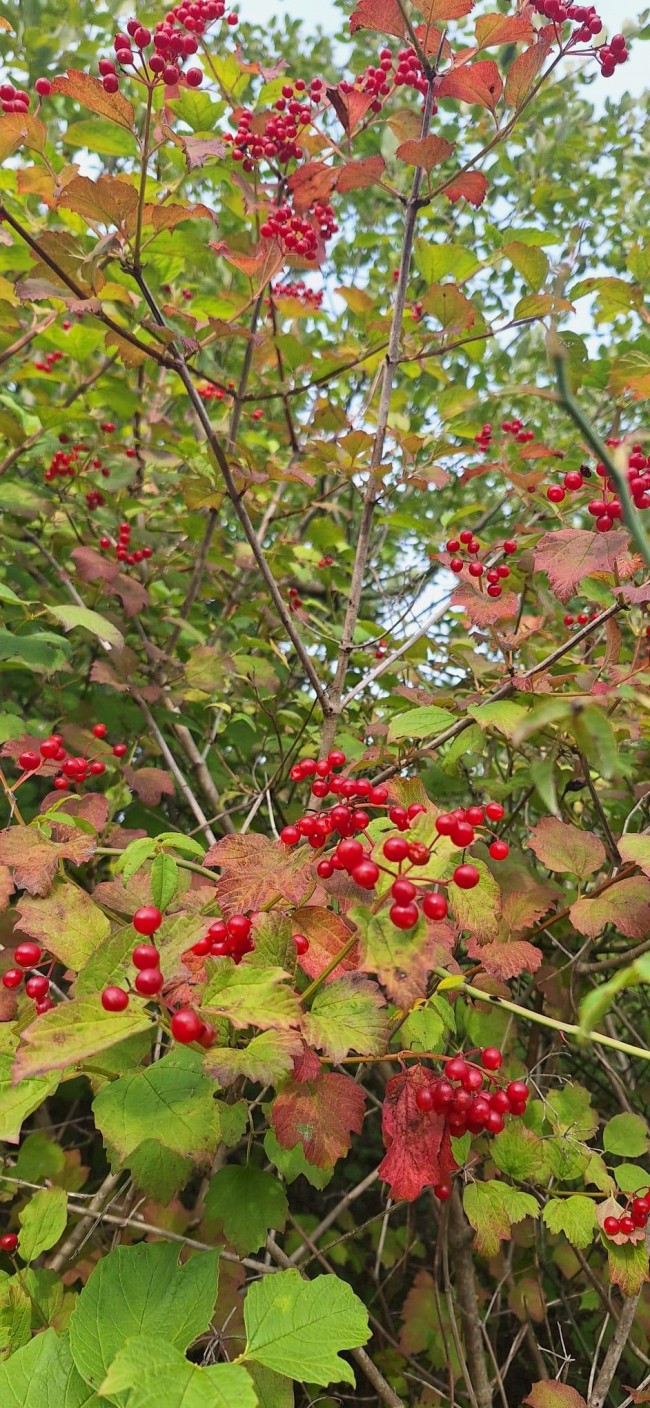
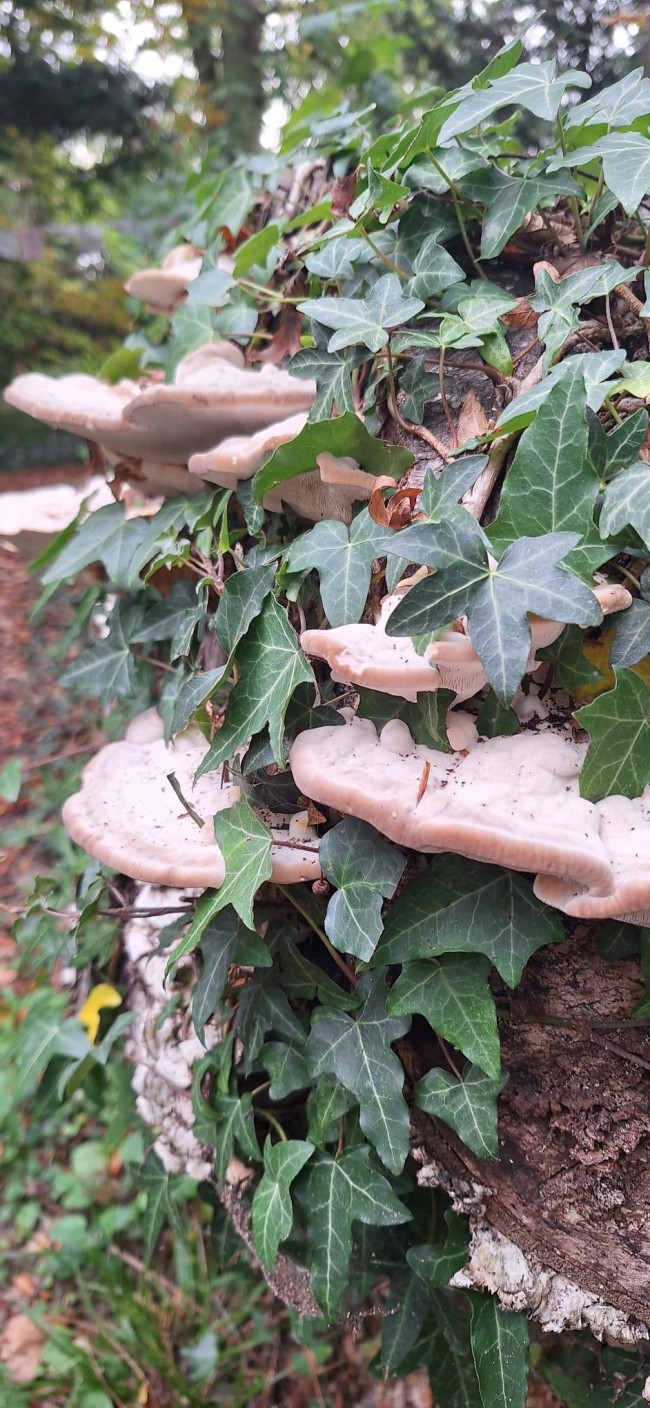
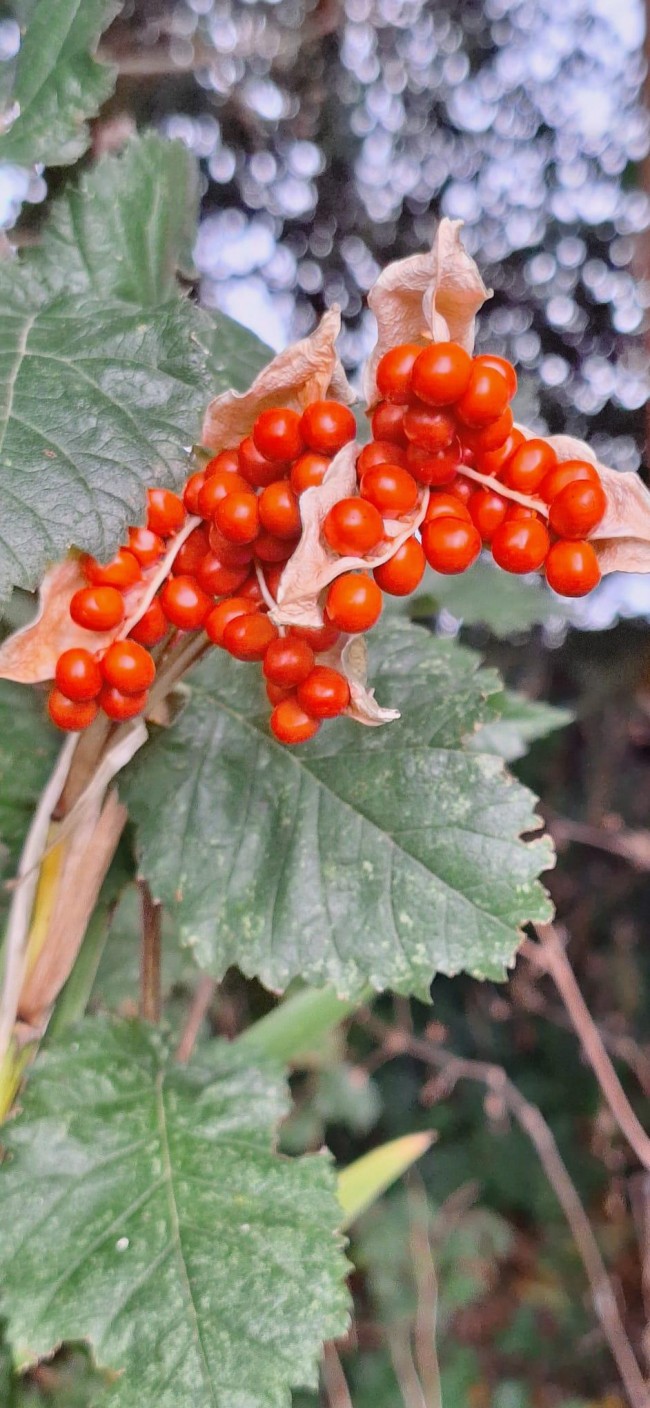
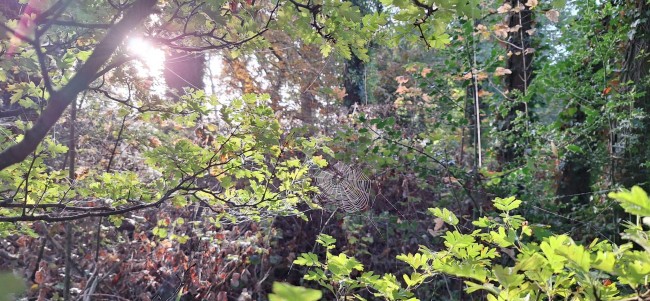
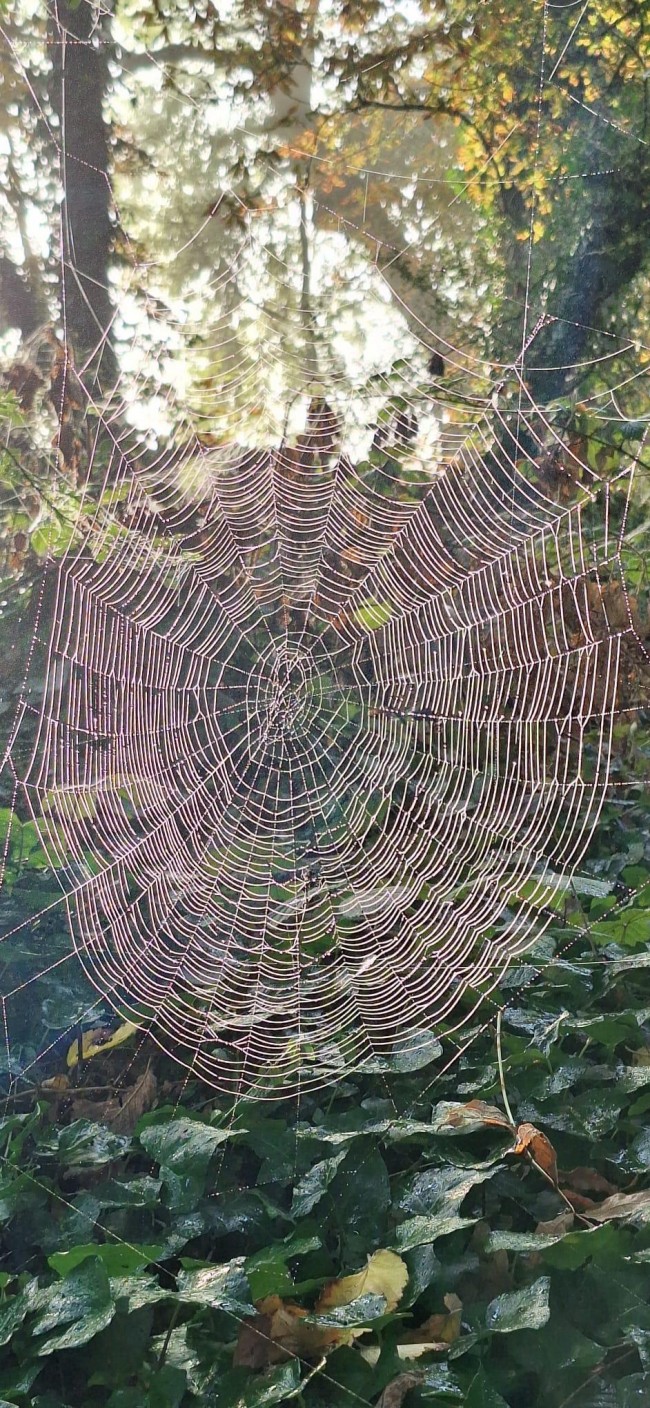
The photos were all taken around Gaia House, before and after the retreat.
The Original Spark for Body + Page
This new workshop comes from my desire to share some of the things that I’ve been doing in my own healing journey over the last few years. Through creatively connecting with my body and with the page (and with more than a little help from a huge support network), I’ve found a pathway through grief and burnout, back to the land of the living.
Just to be clear, my grief has not gone anywhere, but I’m building a beautiful life around it. I have been gradually moving out of survival mode and into the next chapter of my existence, and my body and the page have both been trusty friends along the path.
Why The Body?
The body has always been central to my creative process.
From the age of 6, I was a circus and street performer and my body was my main instrument.
In my 20s I specialised in clowning and fooling, which taught me to listen to and follow spontaneous impulses, primarily felt in the body, and then expressed through the whole of my body.
In my 30s I trained as a dramatherapist where I learned how to collaborate with the body via stories, characters, movement and play, to unlock wisdom and healing.
In my 40s I trained as an IFS therapist where I learned to meet inner parts with compassion and curiosity (by ‘inner parts’ I mean the inner critic, the inner child, the inner teenager, etc). Last year, I finally discovered Somatic IFS, where I learned to do parts work through the body, which made SO MUCH SENSE TO ME! Somatic IFS uses somatic awareness, conscious breathing, radical resonance, mindful movement and attuned touch to access the inner world.
I have a joyful, intimate, friendly relationship with my body and I realise I am incredibly lucky / privileged to have this. It feels pretty edgy to say: I like my body. It’s been my life-long companion. I trust it and I feel safe in it. It hasn’t always been thus, but I find the older I get, even with the extra flab and wrinkles and surprise unruly hairs, I appreciate my body more and more.
I know a lot of people don’t have this experience.
Body: friend or foe?
At Gaia House, I sat in silent contemplation with maybe 70 people. We were attending Martin Aylward’s Triple Gem meditation retreat. I’ve been going to Gaia house for 20 years and Martin is one of my favourite teachers. He’s embodied and playful and very experiential with this interpretation of the Dharma (the Buddhist teachings).
During one of his Dharma talks, Martin asked the question:
Q. What comes to mind when you think of ‘body’?
Perhaps there’s some fondness?
Perhaps there’s some disgust?
Perhaps there are conflicts around what your body looks like / feels like, or the injuries / discomforts it holds?
Tension and Discomfort
Martin explained that the body gets charged with these assumptions and reactions. It accumulates layers of fascination, disgust and ambivalence, which can show up as tension and discomfort in the body.
Q.) Where do you notice tension / discomfort in your body?
Right now I can feel a tightness in my jaw and I’m noticing my tongue is jammed against the roof of my mouth.
Martin proposed that discomfort is just heat + density.
He suggested if we were to meet discomfort in those simple terms, it would be uncomfortable, but not unbearable.
The thing that makes discomfort unbearable is the way we meet it; it becomes unbearable when we turn heat + density into pain + problem.
When we meet discomfort with anger or anxiety, we get into frantically looking for solutions, or we blame ourselves or we look for someone else to blame.
This all creates further tension and discomfort in the body.
Q.) How does this play out for you?
There was a moment during one of the walking meditations, where I stood on a conker shell with bare feet. This immediately activated my inner catastrophizer: “Well, this week is ruined! You won’t be able to get out and about, you’ll be stuck here with all the quiet, slow people and you won’t be able to hack it!” Meanwhile my inner Project Manager started going through my diary, figuring out how we could re-jig everything to make it all work, even if I couldn’t walk, and my inner child started pining for the sheep that she wouldn’t get to play with…
That all happened within a split second of my tender foot feeling the sharp spike of the conker shell.
It wasn’t that deep! My foot was fine and there was no big drama to attend to! But those panicky parts don’t half create stress and contraction in my body!
Relaxation
Martin asked:
Q. What is a relaxed body like?
To help us find out, he offered this experiment:
Experiment 1: Tension / Relaxation
1.) Tense up your whole body - what does that tension feel like in your body? How does it feel in your heart? How does it feel in your mind?
2.) Now try to relax everything - What do you notice now in your body, heart and mind?
Martin explained that the gift that tension brings is the feeling of solidity, density, knowing where you are in the world. To relax is to soften not only your body, but the boundary between you and the world, so that it becomes less clear where you end and the world begins or vice versa.
Sounds nice, but what if it’s not possible to relax?
I hear you! As a trauma-informed Somatic IFS therapist and a human, I know that it’s not always possible to relax the body. Some tension won’t melt away and that’s OK. It doesn’t mean you’re relaxing wrong, it just means your body is needing to protect itself for whatever reason.
Q.) How would it be to soften around the tension?
Rather than adding more tension by pushing, trying, judging, criticising, how would it be to meet the tension with compassion? Sometimes tension is there for a reason, it’s not just having a laugh. Can you welcome it, place a bubble of kindness around it? Then notice what happens next…
Body as Field
Martin invited us to consider:
Q.) What if you were to relate to your body as a swirling, dancing field of sensation?
He said, so often we see our body as a thing, and a problematic thing at that. Martin suggested that in softening and relaxing, we can widen our attention and greet our body as “a swirling, dancing field of sensation.” This allows us to experience ourselves as edgeless and boundless and connected with everything.
Experiment 2: Body as swirling, dancing field of sensation
For a minute or two, turn your attention inwards.
Notice the dancing field of sensation.
You could try noticing:
- Which parts of your body are in contact with the ground?
- Where do your clothes touch your skin?
- Can you feel the air or heat or coolness on your skin?
- Can you feel any sensations inside your body? An ache in your back, a gurgle in your belly, an itch on your nose?
- What happens if, instead of evaluating or judging these sensations, you meet them with curiosity? What do they actually feel like?
- How does meeting your body sensations with curiosity impact your body, heart and mind?
- How does it affect your connection with the world?
Naughty Retreatant
I took a book with me to Martin’s retreat. Tut tut. The idea of meditation retreat is to decrease the stimulation, so that your nervous system has a chance to relax and unwind. You’re not supposed to read or write or talk or look at your phone. You’re meant to just sit in meditation, walk slowly in the grounds, peel potatoes and eat lentils.
In my 20 years of going on meditation retreats, I’ve received so much from relinquishing my phone and letting go of words. But I do like to have a sneaky book on the go - I usually choose something spiritual or philosophical, not a Mills and Boon or a That’s Life! magazine! I ration myself to a chapter a day and savour every word.
One of the other ways I like to break the rules is vigorous movement! THIS BODY HAS TO MOVE! After my first 5-6 retreats, where I suffered in stillness, I began sneaking off into the fields to dance amongst the sheep to Beyoncé on my iPod. The movement and my shifty secret made it more possible and sometimes even pleasurable to sit in stillness in the meditation hall afterwards.
The older I get, the less of a shit I give about being good / obeying rules. I know myself and I know what I need. I brought the book and I gave myself permission to move and I am glad that I did!
How To Be Feral
The book I smuggled in this time is called, ‘How to be feral; Movement practices to re-wild your body’ by movement artist, filmmaker, herbalist, researcher and anthropologist, Claire Loussouarn and I LOVE IT:
“In this book I’m inviting you to question what it means to be human and to have a body by using your moving body as a tool of inquiry….”
Oooooh! Right up my street!
Claire asks ”How can we trust the wisdom of our feral self and unleash its untapped potential? How can we soften the fixed idea we have of our boundaries and let the non-human permeate us?”
Well well, here it is again! Martin suggested relaxation as a pathway to connection with all beings, and here’s Claire, offering the same experience but through feral movement inquiry! How wonderful!
I snuffled up whole chapters every morning and headed out to the fields every afternoon to explore the movement practices.
Here’s an excerpt from one of Claire’s explorations:
Experiment 3: Sensing Surfaces and Substances
“Take time to feel your body surface in stillness.
Notice each inch of your body skin, all the things that it senses and how they vary.
…the air.
…your clothing.
…the ground.
…anything else that touches your skin.
Slowly start moving with the various sensations you feel.
Notice what they invite in movement.
Notice how moving affects the sensations.
Let that grow into a dance where sensations on your skin become your partner….”
(Excerpt from Practice 36, p.86)
Hanging out with the knobbly tree
I did the exercise above with a lovely lumpy tree I’d been eyeing up all week.
Resting in the nook of the trunk and the roots, my body felt cradled and held. I turned my head slowly to feel the cool autumn air moving across my face. Wanting to feel the ground beneath my feet, I took off my shoes and socks. Bare feet on damp grass. Happy. Alive. Here. Feet curious about the textures of the tree trunk, I slowly climbed up the knobbly knuckles, enjoying the snug fit of fleshy arch on craggy lump. Fingers found pockets in the bark, nose found mushrooms to sniff. Solid tree as my support, I turned upside down, cool air on bare toes, damp grass under hands, upside-down sheep, upside-down birds, upside-down clouds. Happy Holly.
Unlearning as a gateway to connection
Claire’s becoming feral process encourages you to tune into your body, into your senses, into the environment and to notice all the ways you’ve been conditioned to meet yourself and the world. She invites you to play with what you discover, opening up new, unfamiliar, unrehearsed ways of encountering yourself and the world.
What about The Page?
I wrote a blog about my relationship with writing earlier this year. Here’s a snippet:
“One of the things I love about writing is the containment of it - the page welcomes your process - however messy, boring, embarrassing, stupid… The page will hold your process with no judgement and when you’ve finished writing, you can close the book, fold the page, rip it up or maybe even burn it… and the page will keep holding your process.”
In 2020 I got awarded a DYCP grant from Arts Council England to explore embodied approaches to writing. There’s something about starting in the body, with not knowing, sensing, moving, embodying, discovering, and then taking it onto the page… The page becomes another place where I can continue to listen to what is happening, rather than a place where I have to produce something good.
When I start with the body, with a little meditation or movement, I am more able to keep my body in my awareness while I’m writing. My body becomes my writing consultant. I notice sensations, tension, discomfort, pleasure, ease and the quality of my breath. This all informs my writing choices, moment to moment.
Right now, I notice my jaw is tight again. Feeling into the tension, I can inquire into which inner part is causing the tension and find out what they are worried about:
Me: Hey! Who’s there?
Critic: You know who’s here, it’s me, you dick!
Me: Oh hi you, how’s it going?
Critic: I’m fine. But what’s up with you? Why are you writing this shitty blog?
Me: I’m actually really enjoying it, it’s helping me distill my retreat experience and get clearer about Body + Page.
Critic: Well, whoop de doop. What’s the fucking point of writing another blog that no-one’s going to read?
Me: Ah OK, I can see you’re getting a bit antsy now. What’s your concern about me writing this blog?
Critic: You’re wasting your time, there’s loads of other things you should be getting on with.
Me: I appreciate your concern, I’ve seen the to-do list, I know what needs to be done and I know there’s enough time to do it, but right now I’m in the flow with this blog and I want to keep going.
Critic: But what about all the emails that need answering? That’s the real work!
Me: Ah OK, I see, you don’t see this as real work. How do you see it?
Critic: It’s self indulgent bollocks!
Me: Aha, and what are you worried might happen to me if I allow myself to wallow in self indulgent bollocks?
Critic: You’ll forget to do all the important stuff like answering emails and paying the gas bill AND you’ll reveal yourself to be a self-indulgent wanker and no-one will come to your workshops and then you’ll die of starvation.
Me: OK, OK, I’m getting why you’re so worried now. Dear Critic, thanks for trying to take care of me. But I am 47 1/2 years old and I’ve built a career from sharing my process like this. Not everyone likes it, but it’s not for them! When I put myself out there, people who dig my process can find me. This is how I pay the bills and I’m safe enough to do it.
Critic: Oh
Me: Yeah right, OH!
Critic: Well, what am I supposed to do today?
Me: What do you want to do?
Critic: I like breathing down your neck, don’t I?
Me: Yes, you do, but I’ve got this - you could be doing something else!
Critic: What, like going to a classic car show?
Me: Sure! If that’s what you want to do! Off you go! See you later!
Body + Page
I’m so grateful for my meditation, movement, writing and Somatic IFS practices, they’ve held me through some of the most difficult years of my life. Meditation allows me to notice what’s happening in my body, heart and mind and greet it with curiosity. Movement helps me to discover limiting patterns, release stuckness and connect with myself and the world in creative ways. Somatic IFS gives me tools to meet my parts through my body and attend to them with breath, movement and/or touch. Writing enables me to meet myself and my parts on the page.
These practices seem to be naturally merging together more and more. Sometimes I start in the body and end up on the page. Sometimes I start on the page and a fragment of text will ask to be moved through the body. The less I try to control the process, the more it shows me what it needs to be and the more fruitful it’s becoming.
I’m delighted to be opening up this inquiry with other creative explorers, through my new workshop, Body + Page: Creative Curiosity. I’ll be offering it three times - twice in-person in Bristol - November 14th and 15th 2026 or 6th and 7th February 2027 and once online on Zoom in 6 weekly sessions starting on January 6th 2027.
If this sounds like your cup of tea, you can find out more info about the in person version here and the online version here.
To find out more about Gaia House go here.
To find out more about Martin Aylward go here.
To find out more about Claire Loussouarn and How to be feral, go here.
Other Holly-Blogs you might be interested in:
- How to chat with your parts on the page
- Grief, Creativity and Community (recent examples of my embodied writing)
- Conversations with my body: Rest
- VIDEO: Somatic Meditation: Earth
- VIDEO: Somatic Meditation: Air