How to chat with your parts on the page
Apr 13 2026
Greetings from the Eurostar!
It’s the day after Easter Monday (Easter Tuesday?), it’s a sunny, spring day and I’m sitting on the packed out Eurostar from London to Paris. I’m on my way to see my dad and step mum who live in the far east of France.
It takes around 13 hours from my tiny flat in bustling Bristol to their ancient, sprawling, tumble-down house in the quiet, peaceful Haute-Saone region of France. I’ve been making this pilgrimage once a year for the last 25 years, since they moved here. It involves a taxi to the station, a train to London, a tube ride across London, the Eurostar to Paris, a walk across Paris, another train to the East of France and finally a lift in my dad and step mum’s tiny car, to their village in the middle of nowhere.
Train days are amongst my favourite kinds of days. On train days I give myself full permission to stare out of windows, read “frivolous” books and write reams and reams of pages. Train day writing tends to be reflective and expansive, exploring what my life looks like in that moment, what’s been happening and what I want to happen next. I treat train days like one big meditation and often land at my destination with new-found insight and perspective.
I’ve spent the first leg of the train journey free-writing and this section is dedicated to writing this blog.
This Blog
I recently got some of my words published in an actual real life book!!! Author Emma E. Redfern was writing a user-friendly guide to Internal Family Systems (IFS) when she stumbled upon one of my blogs, where I was dialoguing with my parts on the page. Tickled by the unfolding internal conversation, Emma asked if she could lift a section of my blog to include in her book and I gratefully agreed (more about the book and that process here).
After that, I had a request from a reader to make a “how to…” guide to help them have a chat with their inner voices on the page. So we go!
This blog gives a little background about my daily writing practice, before offering you a handy 6-step guide to help you dialogue with your parts on the page. I hope it’s helpful to you.
(Edit: The photos were mostly taken in my dad and step mum's garden, the day after I arrived.)
The Artists’ Way
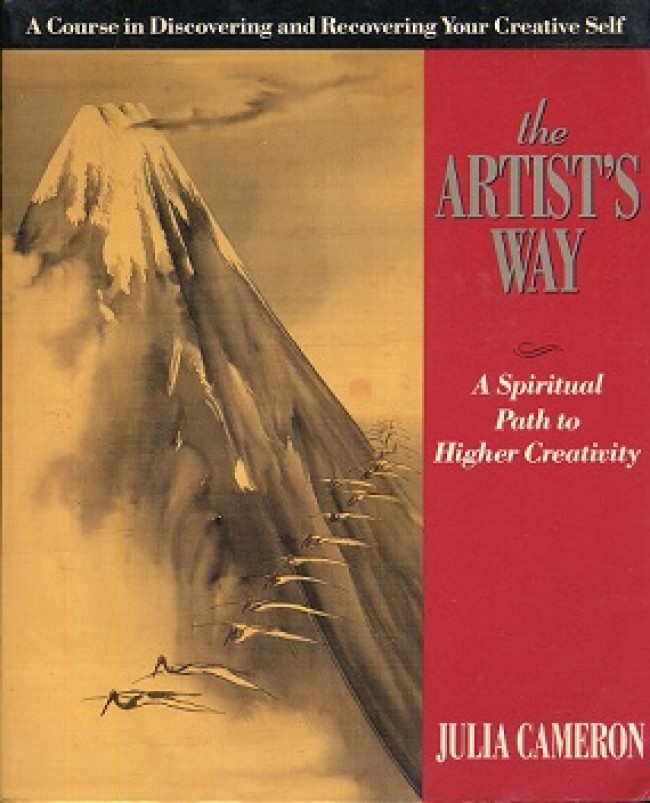
Julia Cameron’s The Artists’ Way, is a self-help book for artists and creatives. It offers a series of readings and exercises to help blocked creatives find their flow. I read it back in 2004, when I was in my mid-twenties. At that point, I’d given up on my beloved performance career, because the mental health roller-coaster seemed impossible to avoid. I’d retrained as a playworker and found a lovely little niche leading anarchic drama workshops for tiny, hilarious clowns, oh, I mean 3-4 year old children. I absolutely LOVED the work (I mean, come on! 3-4 year olds are MY kinda people), but it didn’t feel like it was fulfilling my artistic dreams.
The Artists’ Way got me back on track. I finished the book just as a year-long nursery school contract was ending. 3 days later, I’d given up my home, bought a caravan and signed up for a very long tour, playing music for Nofit State Circus’ Immortal. This tour re-ignited my passion for performance and led to a flurry of performance adventures that continued for years!
The core practice that runs through the whole of The Artists’ Way is The Morning Pages, a practice which invites you to splurge your thoughts onto the page every morning. No censoring, no editing, just moving your pen across the page until you’ve filled three sides of paper. If you get stuck, you write, “I am stuck,” and see what comes next, or alternatively, you can listen to the voice that is blocking you and write down what they have to say (Julia Cameron calls that a blurt).
I have been filling unlined, cream-coloured journals with (mostly) inane drivel in this way for over 20 years. In the safe containment of those pages, I’ve explored my hopes and dreams, examined my fears and blocks, described what I can see, hear, smell, taste, touch, written shockingly bad poetry, made endless pros and cons lists and wondered whether or not I should have another cup of tea (spoiler alert: I generally WILL have another cup of tea).
Journalling is the place I go to be with myself and find out what’s going on inside. I don’t always write in the morning (movement practice and meditation take priority at the beginning of the day), but I try to find a chink in every day to sit and scribble my three pages until clarity emerges, and I know how to proceed with my day.
Internal Family Systems + Fooling

I was already making space in my pages for the voices of my inner parts, long before I started my training in Internal Family Systems (IFS). I’ve written loads about IFS in other blogs so I won’t offer too much background here, but it’s basically a therapeutic system that helps people get to know their inner family of parts. I started my IFS training in 2023 and have since taken modules in IFS couples therapy (IFIO) and Somatic IFS (Steps 1 and 2).
I have spent the last three years exploring ways to combine IFS with Fooling, a form of solo improvisation where you embody your parts on stage. I have been studying, performing and teaching Fooling for over 25 years. I am in the lineage of Master Fool, Franki Anderson.
Fooling produces vital, authentic, risky, connected, wonderful, hilarious, touching, unforgettable instant theatre that will NEVER be seen again. Fooling can also be seen as a therapeutic / spiritual practice. It certainly is for me. Fooling has helped me create healthy distance between me and the voices in my head, so that I can get to know them more and build a better relationship with them.
Bringing it all together
Everything I learn, discover and experience ends up in the pages of my journal! My writing style has been influenced by all my learning and has morphed and changed over the years. Parts have always been welcome on my pages, since Julia Cameron introduced blurts. Fooling taught me how to embody my parts (or masks as they are known in Fooling) and I would often physically “become” the part before picking up a pen and writing directly in their voice. IFS and now Somatic IFS have given me some sturdy structures and steadying protocol to make conversing with my parts even more safe and fruitful.
These days, my journal writing practice is pretty fluid and organic. I have one really strict rule - there are NO RULES about the form my writing takes. There was a period of a couple of years when I (or a part of me) put far too many conditions on my writing and I started getting scared to show up in case I got it wrong. Knowing how important my writing is to me, another part (The Chaos-Meister) eventually came up with a brilliant solution - just start messing around on the page!
The Chaos-Meister sometimes just wrote one word, really big on a page, sometimes just one letter, sometimes a scribble and sometimes they ripped pages out with reckless abandon! At first, this set off shockwaves through my whole system, but eventually the Chaos-Meister managed to loosen up my relationship with writing and the mundanity and genius began to flow again.
One of the things I love about writing is the containment of it - the page welcomes your process - however messy, boring, embarrassing, stupid… The page will hold your process with no judgement and when you’ve finished writing, you can close the book, fold the page, rip it up or maybe even burn it (please don’t set fire to your house) and the page will keep holding your process.
I’m very grateful for my writing practice and delighted to share some of it you.
How To Dialogue With A Part On The Page
Here follows a series of invitations for you to play with. I’m not saying it’s THE way, it’s just the way I do it. Please take whatever is useful and leave the rest behind.
You can decide to do this for a certain amount of time (maybe 10-20 mins?) or a certain number of pages (3 is always my fave) - this extra bit of structure could offer further containment for your exploration. Or you could just freestyle and see what happens.
You might want to start by preparing your writing space and doing a little meditation to ground yourself, or you might be ready to go right now amongst the mess of the day!
If at any point this gets too much, stop! Do whatever you need to do to ground yourself. Shake your body, make a cup of tea, phone a friend, go and look up at the sky! If you find a particularly volatile part, you might want to bring in the extra containment of a friend or therapist or guide to support you with this work.
1.) Start by finding a piece of paper and a pen and write a question:
Me: Hey! Who’s around? Anyone up for a chat?
2.) Find a part who’s up for having a chat
Now, different people experience their parts in different ways. Some people experience their parts in multiple ways.
Here’s some ways that your parts might show up:
- you might hear a distinct voice responding to that question
- you might see / imagine an image of the part showing up
- you might feel a sensation in your body
- you might feel a sudden urge to do something
- you might have a different experience
The next section is a series of different ways to come into contact with a part - I’m mashing up a bit of IFS, a bit of Somatic IFS, a bit of Focussing, a bit of Fooling and a bit of classic Holly Stoppit here - feel free to pick your own path through theses invitations.
If you hear a distinct voice responding to that question
- Turn towards it, get curious about it, who’s that speaking?
- What does their voice sound like? Deep or high? Masculine or feminine or something in between? Loud or quiet? Fast or Slow? What are the qualities of this voice?
- Do you get an image to go with the voice? What does this part look like?
- Can you get a sense of where this part lives, in or around your body? What’s it like to have that part living there?
- Can you take on a bit of their essence? Maybe let them take over your body a bit to show you what their posture, breath, body tension, facial expression is like…
- Once you know a bit more about them, hand over your pen to them and let them answer the question on the page.
If you see / imagine an image of the part showing up
- Turn towards it, get curious about it, who’s that speaking?
- What do you notice about them? Are they a person an animal, a plant, an object, a shape, something else?
- Are they moving or are they still? How do they move? How do they hold themselves? What’s their facial expression like?
- Can you get a sense of where they live in or around your body? What’s that like?
- Can you take on a bit of their essence? Maybe let them take over your body a bit to show you what their posture, breath, body tension, facial expression is like…
- Once you know a bit more about them, hand over your pen to them and let them answer the question on the page.
If you feel a sensation in your body
- Turn towards it, get curious about it, what do you notice about the sensation?
- What’s it like? Is it big, small, hot, cold, constant, intermittent, moving, still?
- Is there a colour that goes with this sensation? A shape? A temperature? A sound?
- Can you detect a part in or around the sensation?
- How do they seem to you? Are they moving or still? How are they holding themselves? What’s their facial expression like?
- Can you take on a bit of their essence? Maybe let them take over your body a bit to show you what their posture, breath, body tension, facial expression is like…
- Once you know a bit more about them, hand over your pen to them and let them answer the question on the page.
If you feel a sudden urge to do something
- Turn towards the impulse, get curious about it, what do you notice about the impulse?
- Can you find a physical gesture to represent this impulse? What happens if you repeat that a few times? You could try slowing it down or speeding it up…
- Can you notice a part communicating through this gesture? Who’s there and what do they want to do?
- What do you notice about their posture, breath, body tension, facial expression?
- Once you know a bit more about them, hand over your pen to them and let them answer the question on the page.
If you have a different experience
- Freestyle, baby!
- Use the above prompts and anything else that comes to you to find a part to chat with
You can see that I’m bringing the body in for all of the above - for me - this is the most direct way to experience my parts - I literally get inside my parts - when I let them take over my body, I learn so much about how they are feeling. Now, I know this is not for everyone! But I’d encourage you to give it a go - even a little bit of embodiment goes a long, long way to help you understand more about your parts.
3.) Have a chat
Now you’ve found a part, the invitation is to move between you and the voice of your part, asking questions, interacting like you would interact with anyone you just met.
Here’s an example of me chatting with a part:
Me: Hey! Who’s around? Anyone up for a chat?
Teenager: No, I’m not “up for a chat.”
Me: Oh, OK, that’s OK, you don’t have to chat to me.
Teenager: What’s it for, anyway?
Me: It’s for a blog.
Teenager: Oh you’re a blogger are you?
Me: Well yes, do you want to be in my blog?
Teenager: Yeah maybe, will people read it?
Me: I hope so.
Teenager: Can you tell them about my band?
Me: Ah cool, you’ve got a band! What are you called?
Teenager: Twat Fuckticles
Me: Have you really got a band called Twat Fuckticles or are you just wanting to swear on my blog?
Teenager: Not saying.
Me: Oh you!
What’s important in these chats, is to come from a genuine place of curiosity and compassion. The first stage of connecting with a part is demonstrating a genuine interest in them. In my experience, parts will rarely open up unless they genuinely feel seen, heard and respected by the listener.
4.) Make space for other parts!
You might find that as you’re beginning to dialogue with a part, other parts start popping up. You might experience them appearing in any of the ways suggested above (as a voice, an image, a sensation, an impulse or another way), in which case, you can take some time to explore who’s shown up, using the suggestions above, before including their voice on the page too.
There’s another more sneaky way that parts show up - sometimes they hijack the “me” voice. It takes a certain amount of astute detective work to notice when they do this, because they can be really, really sneaky! Let’s see an example:
Me: Hey! Who’s around? Anyone up for a chat?
Patricia (my inner academic): Yes, I’m here.
Me: Oh goodie! I’ve been wondering how you’ve been getting on. How are you doing?
Patricia: Well quite frankly I’m a little bit worried.
Me: Oh yes? Why’s that?
Patricia: I’m worried you’re giving away all our secrets in this blog.
Me: What? I’m not giving away any secrets! I’m just writing a blog, I write blogs, that’s what I do!
Me: Ahem, excuse me, are you a part?
Blog Writer: Ah yes, you caught me, Yes, I’m the Blog Writer, how did you spot me?
Me: I noticed a bit of tension coming into my jaw when you were responding to Patricia.
Patricia: Well spotted, Holly!
Me: Thanks, Patricia!
In IFS, they use the term Self or Self-Energy to describe the kind witnessing consciousness I know from my meditation practice as Buddha Nature. Self is the part of us that is not a part. The big difference between parts and Self is that Self does not have an agenda. Self simply bares witness with compassion, curiosity, clarity, confidence, courage, calm and/or centredness (these are known in IFS as the 8 C’s of Self). Self Energy or Buddha Nature is what I try to tap into when I’m in the “me” voice in my writing practice.
During the above conversation, I spotted a part creeping in, by the tension that appeared in my jaw and the sudden defensiveness on the page (Self does not have an agenda). You might notice parts creeping in, in other ways, including a change of breath, posture, pace or suddenly feeling flooded by emotions. It’s not that emotions can’t be experienced when you’re in Self Energy, but check: is there also a sense of compassion, curiosity, clarity, confidence, courage, calm and/or centredness? If the answer is no, you might well have been hijacked by a part!
The key to all of this is curiosity. If you don’t know if it’s a part or not, then ask. In my experience, when I can create an environment of kindly curiosity, my parts can’t wait to be seen and heard. It’s my job to stay patient and curious and fascinated in the process.
5.) Follow your curiosity
If I were to continue the above conversation, I might turn my curiosity towards Patricia and gently inquire about why she’s worried about me giving all our secrets away (I just asked her - she really, REALLY wants to write a book, and she’s afraid that the blogs will make it obsolete - fair enough). Or I might turn my attention towards the Blog Writer and find out why it’s so important for her to write these blogs (She says she loves to share what she knows AND the blogs offer a way of maintaining an a connection with my community, if she has to stop writing blogs, she worries we’ll lose connection - fair enough).
More parts might pop up to join in the conversation, the teenager might even pop back in to tell me how boring it all is! I just follow my curiosity and ask my parts to tell me what they need me to know.
What you’ll probably discover is that your protector parts are invariably trying to steer you towards a safer / “better” place, or away from something/someone/another part that they deem dangerous for your exiled parts (more about protectors and exiles here). Find out what they are afraid of, and you’ll invariably reveal the hidden vulnerable exiles underneath. Our banished exiles are DESPERATE for our attention, but unless you have gained the trust of your protectors, it’s nigh on impossible to gain direct contact with your exiles (the protectors will block access in every way they can).
It can take time to gain the trust of your protector parts and meeting them on the page with curiosity and compassion is a great way of establishing and maintaining a relationship.
Take your time, let go of your agenda, tune into your curiosity and be prepared to be surprised!
6.) Say goodbye
Like all good chats, it’s a bit rude to stop without some sort of goodbye (I always find that weird when they do that with phone calls on the telly, don’t you?). When it comes to goodbyes, it’s good to go with something that feels authentic to you. But parts do tend to appreciate a bit of closure - it all helps to build trust.
Some ways to say goodbye to your parts:
- you could let them know that you’re about to finish this conversation
- you could thank your parts for showing up and agreeing to chat with you
- you could let them know what you’ve appreciated about this chat
- you could ask them if there are any final things they want to tell you or ask you
- you could do a final check-in to see how everyone’s getting on now and what they might need to get on with the day
- you could offer to meet them again at another time that works for all of you, to continue the conversation, if needed
The End Of This Blog
Well there we have it. That’s some things I do in my writing practice. I hope that was helpful to you. I enjoyed writing it on the Eurostar. There was a guy sitting next to me who was peeking at my writing. I wondered what he made of it. I didn’t ask him. I’ll never know.
I’ve since trundled across the sun-drenched cobbled streets of Paris, carrying far too much stuff (I will NEVER learn), through clouds of pungent purple cigarette smoke (how do the French still manage to make smoking look so cool?), nearly getting run over by moody French bus drivers, grumpy taxi drivers and surly/cool French people on mopeds and bikes (it always takes me a couple of days to remember how traffic works), past traditional terrace cafe bars, heaving with noisy red-faced tourists and Indian sweet shops laden with piles of sticky sweet treats and patisseries and patisseries and patisseries (Oh alright, how could I not pick up a few French fancies on my way?).
Those familiar Parisian streets are adorned with 25 years of previous versions of me, all carrying far too much stuff (mostly knackered ones, in need of deep rest, good cheese, nourishing company, rejuvenating nature and swathes of undisturbed time to write). I’m feeling a lot of affection towards them all.
Now on the mega efficient, quiet, cool train, which will deliver me to my family in a few hours, I will spend this next leg of the journey gazing out the window at the disappearing city-scape. When I’m ready, I’ll gather up all those dear past Holly’s and check in with them all on the page.
Was this useful to you? Feel free to drop me a line on holly@hollystoppit.com if you found it to be of benefit.
Now taking requests! Is there a blog you want me to write? Get in touch and I'll see what I can do!
Other Holly-blogs you might be interested in reading: