How to Live In A Queer Dying Body
Mar 09 2026
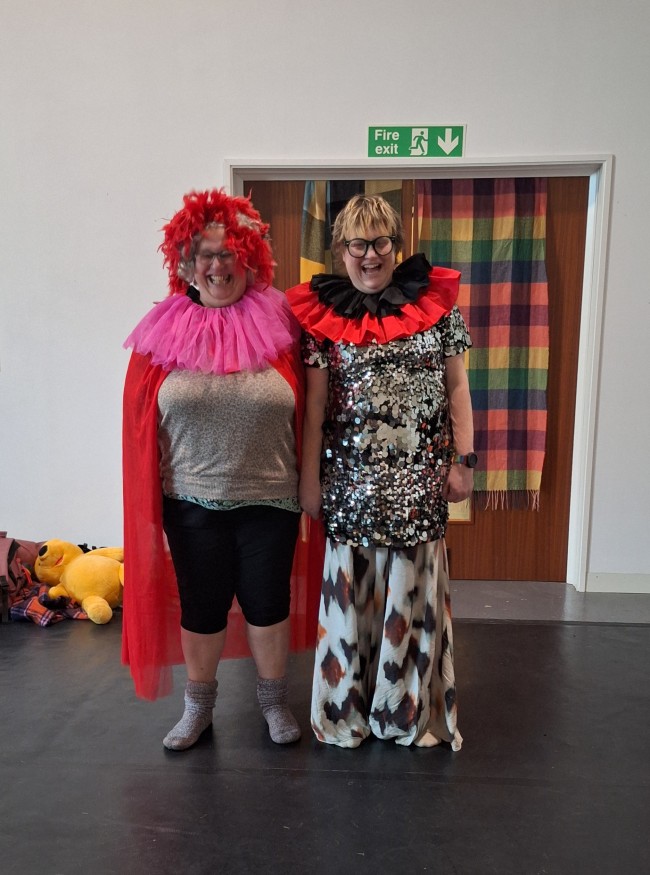
This is a guest blog written by Lucy Heard. Lucy invited me to facilitate a three day artists' residency for her and her collaborator, Bee Golding, at 101 Outdoor Arts centre near Newbury in February 2026.
This blog describes some of what we got up to in our residency, in the context of Lucy's year-long Arts Council funded research project - How To Live In A Queer Dying Body. The photos were all taken by Bee and me during the residency.
Over to you Lucy!
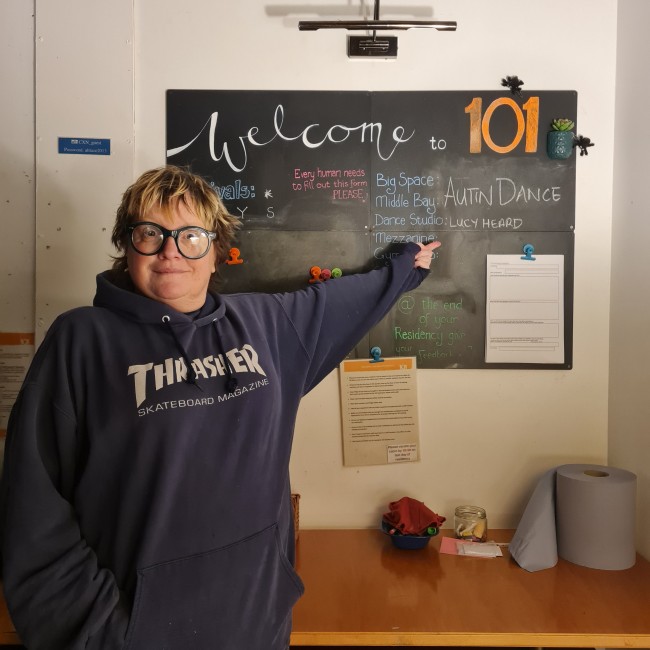
Last August I was awarded a Developing Your Creative Practice grant from Arts Council England to move my practice from producer to artist. Writing the application had felt like taking my skin off. Weeks passed after I was awarded the grant before I could bear to reread what I had said I would do. When the payment was delayed, I was convinced I would be outed as a fraud. The fraud police is one of my parts.
But the money arrived eventually. And I had to become what I’d said I was.
My artistic/somatic enquiry is how to live in a queer dying body. Not in a mysterious or gothic way. Not fixed, ornate or contained. But in a way that is alive, moving, unreliable, shifting. I am disabled. I have type 2 diabetes, and I am neurodivergent. I am as uncomfortable with my disability as I am with my queerness, as I am with the inevitability of death. All three are happening in every moment, with or without my permission. My senses are unreliable. The ground often comes to meet me rather than me meeting the ground. The world keeps spinning.
These are not new themes. They have been in me for years, gathering weight, waiting for the conditions to be right. The grant gave me permission, reluctantly accepted, to take them seriously.
The Body and Its Protections
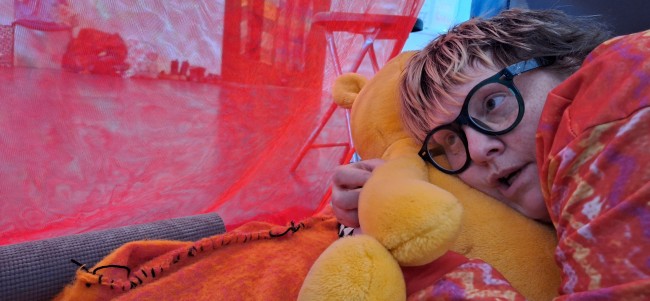
My body works hard to keep me safe. It has an impassivity, a resting bitch face. It withholds. It won’t always tell me where it is in space. These are not failures. They are protections, learned and loyal, doing the only job they know. My work has been trauma-informed. I return again and again, in this understanding, that the body’s responses can make sense.
And yet this same body is made of water, air, fire and earth, constantly exchanging with the planet it walks on, constantly becoming something else. Dying is not a distant event. It is happening now, in every cell, every breath. We are all compost. The body is not separate from the earth but a temporary arrangement of matter in constant exchange, with the ground, with the air, with everything it touches, even after death.
To recognise this somatically is to unseat the myth of human separateness. The ecological crisis is not out there. It lives in the jaw, the breath held in the chest, the tension in the feet. We carry the extraction inside our metabolic systems, in the demand and contraction of our form.
This enquiry asks what becomes possible when the protections can soften. When the body is not managed but listened to. When the felt sense, unreliable, spinning, withholding, is trusted anyway.
I began, in August 2025, by attending Holly Stoppit and Dominique Fester's The Fools Body course, an opportunity to spend time with my body and find ways to listen to and express the wisdom contained within. I was a gentle way to begin, with a gang of fools all on the same quest. It was the right way to start. It was terrifying.
Queerness and Dying

We have so many words for dying that are not dying. Our gravestones and healthcare systems are littered with euphemisms: sleeping, peaceful, gone to a better place, rose cottage (the morgue). As if even in death, we cannot quite say the word.
Queerness has its own euphemisms. It's own ways of not quite being named. I am 47. I grew up under Section 28. My queerness was made invisible at exactly the age I was forming. I am still finding my way into it. There is no exam. No certificate of arrival. Just the ongoing, embodied work of allowing what is true. (I rewatch 90s editions of Top of the Pops on BBC4 some Friday evenings. Everything about my sexuality becomes clear. It was crystallised in my soul every Thursday evening, 7 o’clock, BBC1 circa 1990 - 1992)
Queerness, like dying, is happening in every moment, with or without my permission. Both are processes I am inside of, whether I consent or not. Both are subject to impermanence. Nothing stays the same; all things shift, slide, get covered and uncovered over time. The body knows this. The earth knows this. The compost knows this.
And even here, especially here, there is joy. This work is for those ready to use the real words.
The Cast
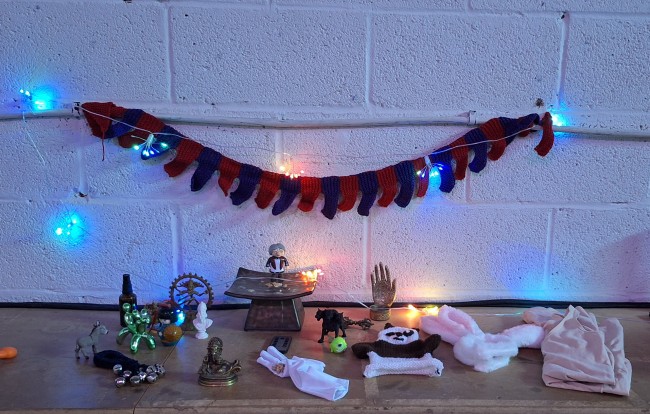
I have been working with my inner cast for over ten years, since being a guinea pig for Holly’s MA research in Clown Therapy, lying on studio floors long before I knew what IFS was, finding out what lived inside me through play and fooling and tears.
The scrapbooks started as part of a project called the Compendium of Superheroes and Alter Egos. (Liz Clarke) A way to develop my character, Joan, based on Joan of Arc, Freddie Mercury and me. I have tried other scrap and sketchbooks since then. None work quite as well as these cheap, nostalgic ones. There is something about the paper's low stakes that lets the truth come more easily. The first thing I wrote in the current book was: 'honour the practice'.
Inside lives some of my inner cast, characters gathered across a decade. Some are defined in pen and full colour, vivid and fully realised. Some still in pencil, still becoming. Others just don’t even make it in, wisps, fairies, fleeting, unknowable, there and gone in an instant, the kind of thing you only ever see in the corner of your eye.
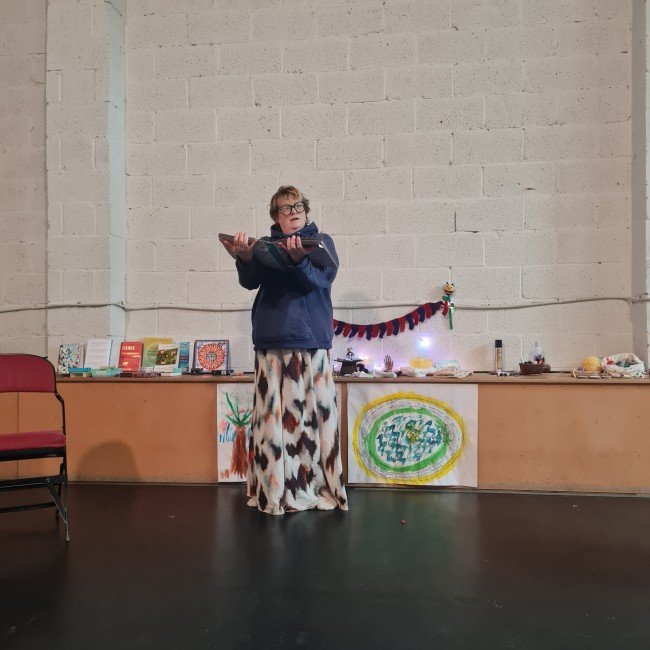
A lot of my cast are male. Early cast members borrowed from Disney films and children’s television. I like to think they are becoming a little more sophisticated these days, but I am very easily influenced. The cast is always growing as I learn to trust live with my body and my feelings.
The yoga instructor is in the book, knows all the right words, moving fluently between wellbeing and punishment, switching registers without missing a beat. Wise and well-equipped. That part is still learning to be kind and often goes off script into painful poses or aggressive mindfulness.
The fraud police are not in the book. That part solidified further during the Fool's Body course. I had a lie on the floor, and a cry about how I didn’t know how to be an artist. It was too big a task. That part is convinced that at any moment someone will notice that the grant was a mistake, that the work is not real work, that I am not a real artist. They visit me often, I struggle to bring them to my play.
In February 2026, supported by 101 Outdoor Arts, a vast warehouse on the psychogeography of a former US airbase beside Greenham Common, two new cast members arrived.
The arctic explorer, a man who would rather grow an icicle beard than pull his friends towards him for help. Fully equipped for the harshest conditions. Stubbornly, magnificently self-sufficient. Glasses frosted over, still sitting in the blizzard, absolutely not fine but surviving.

And a tiny door. Small, wooden, cartoonish, brown, with flowers and grass at each corner, like the door to a hobbit house. Set into the earth, made for welcome, built for warmth. A door in my chest that opens just long enough to say I love you and then slams shut with a bye. Not cold. Made for opening. Just can’t stay open for long…… yet.

I brought the latest scrapbook into the residency with me. I set up altar in the studio, with trimmings and lights, objects placed to represent some of the cast. During the last day, I saw the book differently, not as a cheap scrapbook but as a weighty tome, an illuminated manuscript, an ancient text. The kind kept in a monastery, copied by candlelight, containing the accumulated wisdom of ages. Which is, of course, exactly what it is. Low value to the world. Sacred to me. Still growing.
The book is not finished. Neither am I.
Safety

The residency at 101 was three days in February 2026 with Bee Golding, poet, fool, co-conspirator, the person who has been my closest creative ally for six years, first as the Radical Admin Collective, now as We Are LAB, and Holly Stoppit, who held the container while Bee and I found each other inside it.

We arrived in layers. On the journey, Bee and I took stock:
B: How many coats have you got?
L: I’ve got two, what about you?
B: Well I’ve got one coat and a poncho.
L: Oh I’ve got a poncho and a cape.
B: Oh yeah, I’ve got a cape, no two capes and a ruff.
L: I’ve got three ruffs...
Very proud of our smooth exit from Bristol and arrival at 101. I welcomed my team to the grand space that I am very familiar with and comfortable in since my participation in Toolbox for outdoor arts producers
I was excited to get started in the space as an artist and maker. We made the dance studio our own, bringing in sofas and cushions, the right lighting soundtrack before yielding to the floor. We rolled. We pushed back up.
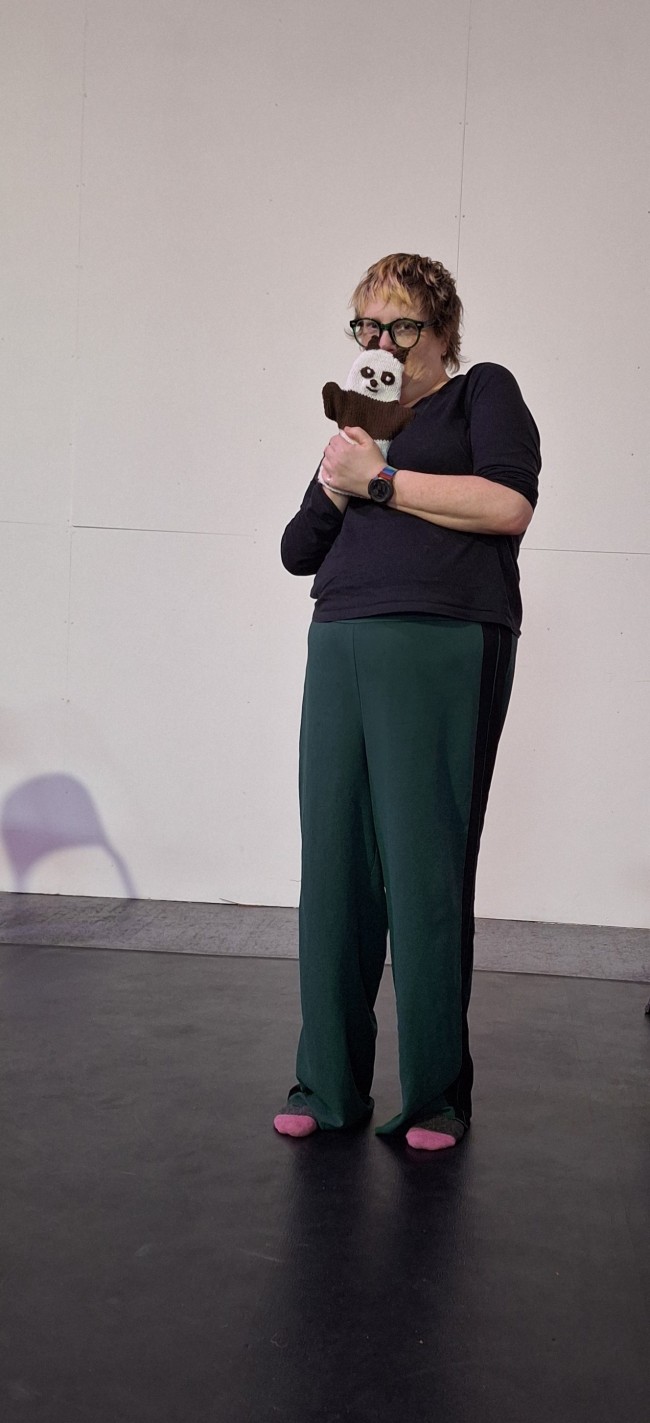
During lunch, Bee gave me a gift. She had knitted me a panda. Not just any panda, she had listened, really listened, to a story I had told her about being four years old, arriving at ballet class in a jumper my grandmother had knitted me. It had a panda on it. Everyone else had wrap-over pink cardigans and perfect buns. I had short hair, a dirty face and a panda jumper. I was chaotic. I was completely myself. I had no idea yet that this would become my style.
When Bee placed the knitted panda in my hands, I nearly cried. Not from sadness. From being seen. From the particular quality of attention that says: I heard you. I made you something from what I hear
The panda became a mask in my first fool, an adorable, compassionate mask that allowed me to get up close to my audience. Unusual behaviour for me. The panda knows things the Arctic explorer doesn’t.
In the afternoon, we walked to Greenham Common. The beautiful spring sun, the gorse bush in flower. We stood where 30,000 women had once joined hands around the nuclear base, had danced on missile bunkers, had said with their bodies: we will not pretend this is safe. We located ourselves within the elements, imagining huge water systems beneath our feet, collecting treasures from the earth in jars, enjoying the particular pleasure of trousers flapping in a stiff breeze. We came back changed, filled with something that had lived in that ground for decades, and the quiet joy of a sinister secret space transformed into somewhere full of bikes, runners, and small dogs who were scared of the hats we had chosen to wear.
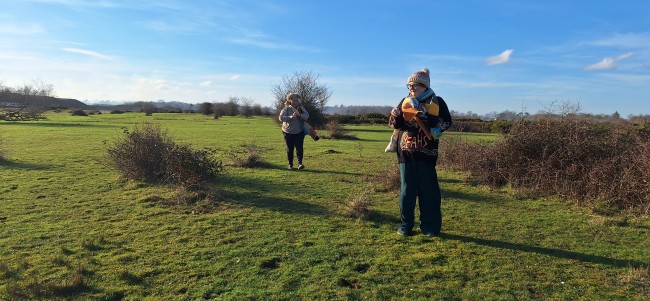
We closed the first evening, the only way we could. Whitney Houston. I’m Every Woman. LOUDLY. We danced. We sang. We were ourselves and every woman simultaneously, three people in a warehouse on the bones of a nuclear airbase, beside the ground where 30,000 women had once stood and said enough. It seemed important to honour ourselves and every woman all at the same time. It was. It absolutely was.
The next morning, in our check-in, I said I wanted to be held to account around the question of safety.
The question was:
Do I feel safe, or am I just pretending?
This is a mask I wear often. Fitting in to make others comfortable, smoothing myself into a shape that causes less inconvenience, my own needs quietly set aside. The four-year-old in the panda jumper hadn’t learned this yet. Somewhere along the way, she did.
My play that morning was too wordy. Too narrative. Too cerebral. Holly said I didn’t need to make sense. I agreed and understood immediately: shut up and feel. This is a constant lesson.


Later we made dens, safe spaces built from stolen bedsheets and sofa cushions. We peeped out at each other, getting used to proximity, to the particular shyness of being seen. Gradually, gently, Bee and I moved towards each other. Someone introduced a tennis ball. We passed it between us, hand to hand, fingertip to fingertip. Connection, stillness, shyness and moving. All very light touch. Delicious co-regulation. We became friends all over again, remembered why we make things together, what we are to each other when the work strips everything back.
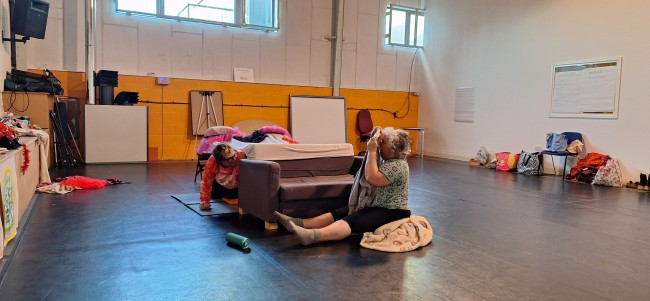

That evening, we made a fire. The fourth element, arrived. We sat around it, sang and drank wine.
We wrote a collective poem

mysterious and smoky
dedicate the practice
co-regulating our way to safety
dens built from stolen bedsheets
tennis ball exchange, fingertip touch
earth below, sky above, water everywhere
hiding in the loft under sofa cushions
time was fast and slow, passing gently
do I feel safe or am I just pretending?
I secretly threw in my Ganesh (remover of obstacles) incense in the fire after the others had made their way to bed. I wasn’t feeling like I had made the most of my time, that we had maybe been too soft, too gentle. My inner yoga teacher was not trying hard enough; that art has to be pain, or it isn’t meaningful.
Rest
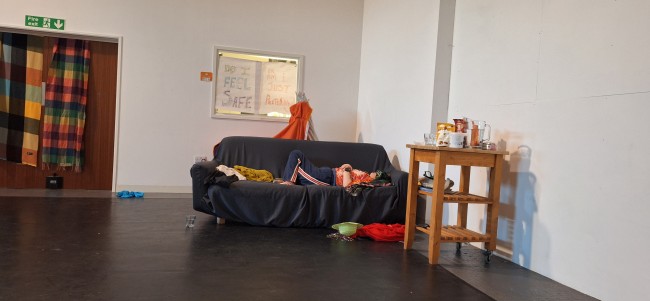
Rest was always part of this enquiry. I have been meeting with Kate Oliver (Radical Rest Network) to explore ways that I can incorporate rest into my work and advocate for social change around rest. Not as recovery, not as reward, not as the thing you do when you’ve finally broken. As prevention. As practice. As an act of love for the body you live in.
To rest is already a queer act, a refusal of the body as instrument, a refusal of worth measured in output. The ecological crisis and the personal crisis are the same crisis: the myth that growth without limit is possible, that extraction without cost is sustainable, that rest is weakness.
Reader, I lay down regularly during my 3-day exploration, and invited others to rest as well. We talked about how we have been conditioned to be sharks, under the impression that if we stop, we die. It's not true, it's capitalism, it's patriarchy, we can work to dismantle these systems of oppression, and the work starts with ourselves.
The Fool
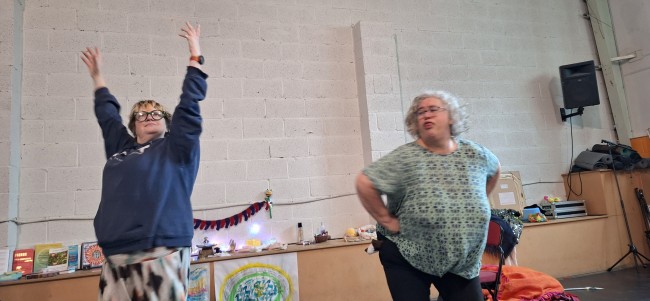
I was offered a 45 minute fool, a rare gift, I look the gift. Much of the time remains a mystery, with the first half an hour evaporating in what felt like 3 mins.
Bee was invited into the fool from the start. She played me as a child, arriving at ballet class in a blue panda jumper. I played the swan I was supposed to become. The Ugly Duckling story, but inverted. I didn’t want to be the swan. The duck was the truth of me, the embodiment of my queerness, there from the beginning, unglamorous, refusing the expected costume, perfectly itself. Being the swan required far less effort. That was the surprise. That the acceptable, graceful, performed version of me costs less energy than the real one.
The panda jumper. The ballet class. The duck who stayed a duck. It was all the same story.
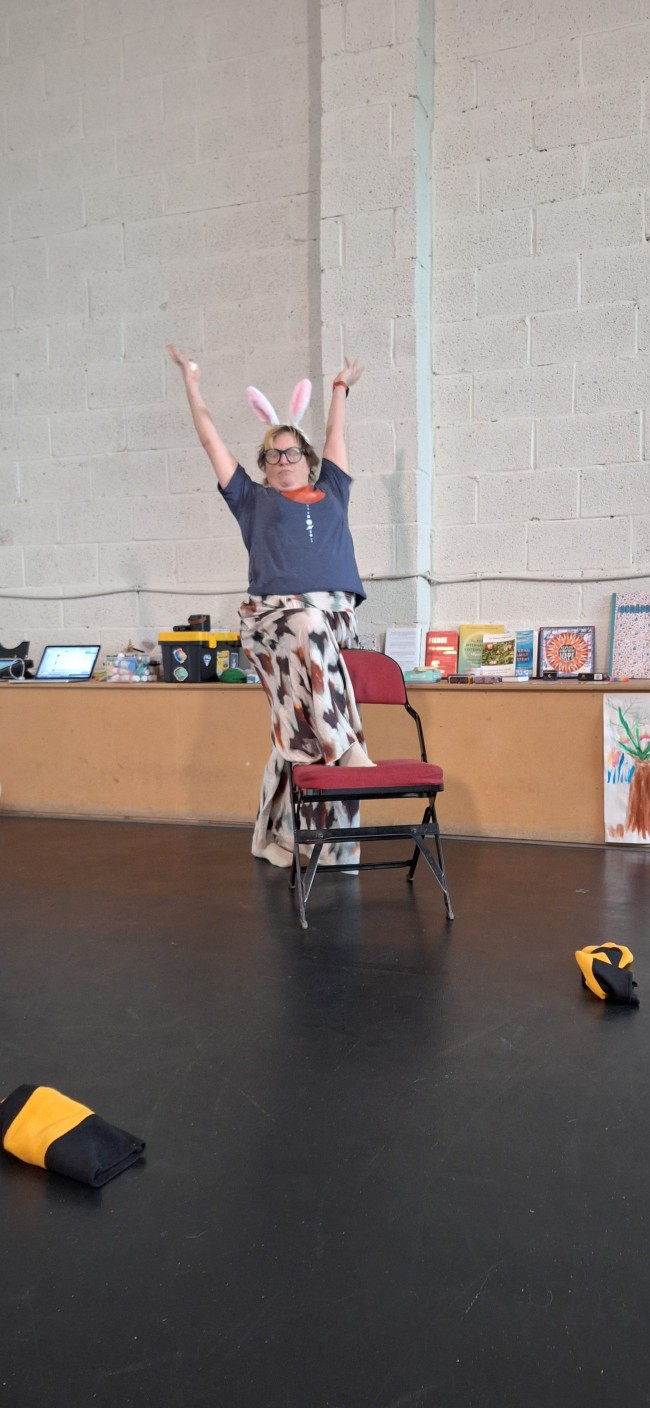
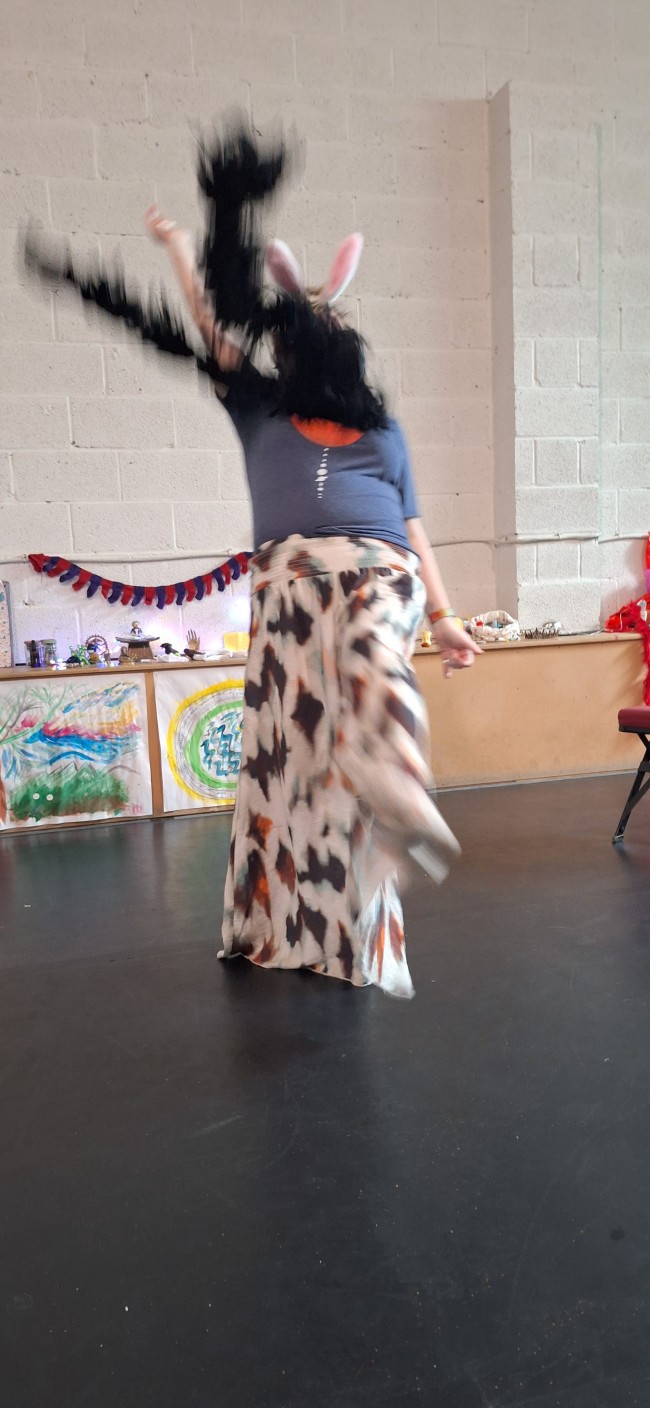
The fool continued. I wore the Bees Knees, legwarmers knitted by Bee’s niece Amber, and ran around to Flight of the Bumblebee, because I once made a film about bees and it makes me anxious. Am I any good at film making? Is this a thing I’m allowed to do? I exhausted myself. Vulnerability makes me hungry, so I picked up an apple. The apple became chocolate. Chocolate became a lover. I snogged the apple like I was wild about it, completely infatuated, and then announced it was like an abusive boyfriend. ‘Everyone else likes him, he’s no good for me, but he’s really good at parties.’


Then, with the help of the rockstar bunny, who embodies the spirit of Mick Jagger and a very sexy rabbit, probably Bugs Bunny dressed as a girl, I became a burlesque performer. Something I have visited before but always held something back. I need to embody male energy when I want to be seen as sexy. Many years ago I was exploring how to be a woman through burlesque. I am still not entirely sure I know how, my overriding vibe being a thirteen-year-old skater boy.
The Map
We spent time asking what this work could become. The answers ranged from intimate to huge and immersive. Ceremony. Ritual. Gathering. Songs and drums and dancing and storytelling. A soft space for grief. A way of finding people in between activism, people who need permission to rest, to be seen, to remember their own divinity. The scale could be anything. The heart of it stays the same.
On the last afternoon, we sat with the Buddhist story of Kisa Gotami, a young mother so consumed by grief at the death of her child that she could not accept he was gone. She went from door to door asking for a mustard seed from a house untouched by death. She found none. Every house had lost someone. The medicine, the Buddha told her, was never for the child. It was for her. The realisation arrived not as an announcement but through the accumulation of lived experience, door by door, house by house, body by body.
The three days had been our mustard seed journey. We had not found a body untouched by dying, by queerness, by disability, by the desperate yearning for rest. We had found they were everywhere. Universal. Not mine alone.

To close, we made a map as large as the room, using every object we had brought and gathered. The IFS book open on the floor. The jars of treasure from the Common. The fox jumper. The black feather boa. The thread. The golden hand. The rockstar bunny ears. The paintings. The bee cushion. The atomiser of acceptance, filled with Florida water, a Voodoo cleansing cologne, ancient and practical and slightly ridiculous and exactly right.
The map became a score. A shared language. A demonstration that everything we need is right here, we have been collecting it all along. These are some of the ways in it offered us as ways in to the body.
bee-ing
don’t skimp on the safety
asking for help / receiving help
how does it feel in the body and where?
let it be simple
it’s ok to say NO
breathe
seek out comfort
ask yourself: do I like it?
slow down
remember you are magic and wise
dance
remember your divinity
remember your stupidity
crying is always welcome
have a sandwich
lovebomb your demons
start where you are
you’re doing it right
the atomiser of acceptance
rest is a gateway to creativity
we’re together in our oddness
fierce self-compassion, this is the one to remember
make an offer, you don’t need to know what happens next
treasure, we have all we need
demons and hot-tubs / joy and tragedy
it’s alright if you smell
What Comes Next
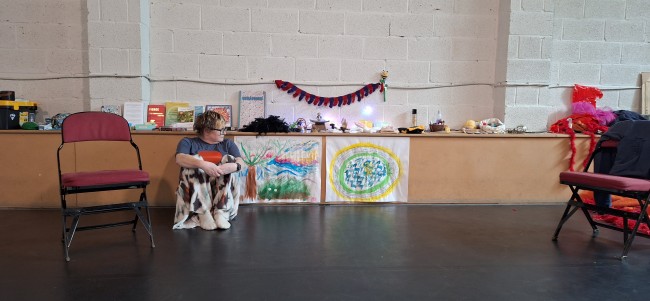
From this map, I am making my first deck of cards. Both Bee and I have extensive collections of divination decks, truth seeking, resonance, the sideways question. This will be our first bespoke one. Made from our own inner landscape, our own elements, our own cast of characters.
Provocations, portals, stories into and from the body. Something to reach for when the mind freezes and can’t find its way in. Each card an elemental invitation, a sensation to locate, a Fool’s strategy. A threshold into the larger questions of how we are in the world, how we rest, and how we face dying.
This is not end-of-life work. This is while-you-are-alive work.
Where do we go from here? Who knows, this intense work needs to settle. I’ve got some rules to follow.
Honour the practice.
It doesn’t have to be good.
Be quiet.
Listen to the impulse in the body.
Kindness is strength.
You are allowed to lie down. That is the work.

Lucy Heard is an artist, producer and co-founder of We Are LAB with Bee Golding. You can find their work at WeAreLAB.ART and follow their Field Trips on Facebook and Instagram. They also host Monday Manifesto, a weekly group gathering to set intentions and reflect on how we’ve met them. All are welcome.
This residency was supported by 101 Outdoor Arts and funded by a Developing Your Creative Practice grant from Arts Council England.